
Same Protocol, Opposite Results
I've watched students follow the trainer's advice perfectly and get nothing. The technique wasn't the problem.

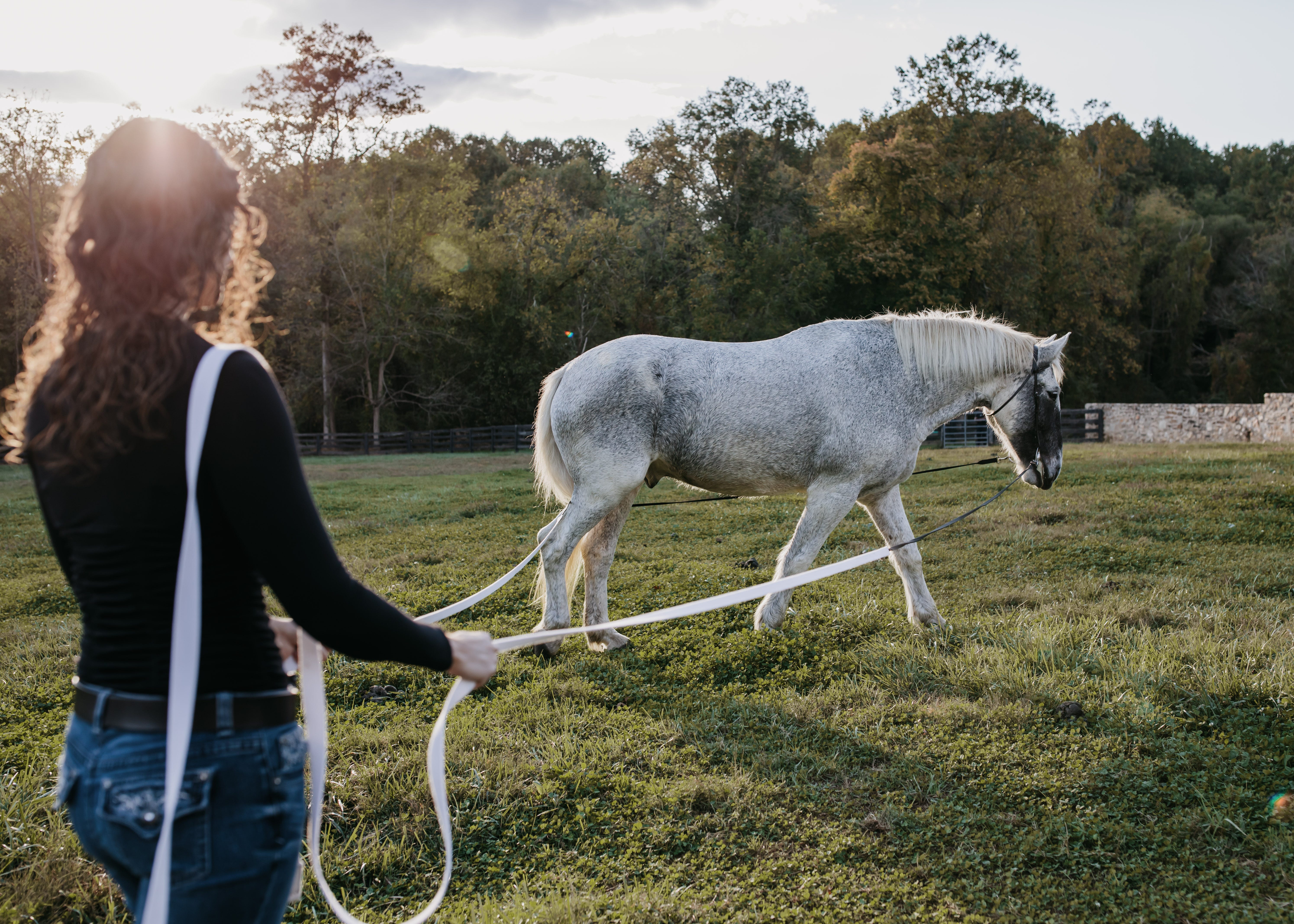
I can’t count the number of times this has happened to me.
Most recently in a lesson with Tali — a little gray Kentucky Mountain Horse I exercise for a friend. My trainer Kirsten was coaching me on how to sit and how to ask to help Tali find her balance and coordination. She is a challenging horse, and I was trying SO hard to figure it out. Full on helmet fire, smoke coming out of my ears — or maybe that was just sweat.
I could. not. get it.
All the parts and pieces appeared to be in place. I was doing what I was told. And somehow it just wasn’t computing to her. We were still wobbling around crooked and unsteady like a pair of drunkards.
As my frustration grew, Kirsten wisely intervened and hopped up in the saddle to show me. Tali organized immediately — stretched her neck down, found her balance, exactly as Kirsten said she would. Effortless.
I got back on with a little clarity, and at least knew what she was supposed to look like, but still got half the result.
My first instinct was to look for what I was doing wrong technically. Was it my position? Timing? Am I asking wrong? Kirsten reminded me that I was doing everything correctly — that it takes time for bodies and nervous systems to find change. She wasn’t wrong. But there was something else underneath that I couldn’t see or feel yet.
The missing piece was my own nervous system, energetic and body alignment with what I was attempting to ask for. The cues were technically right, but the energy underneath the ask wasn’t clear. I was frustrated. Trying too hard. And then bracing against the possibility of getting it wrong, again. And Tali, who doesn’t speak English, was reading all of that unspoken energy and confusion.
The frustration of not being able to do what the trainer makes look so easy? That frustration is misaligned energy. You’re asking your horse to organize and soften while you’re doing the opposite. She’s not being difficult. She’s being accurate. She’s simply giving feedback about the energy and information she’s been given.
Animals don’t use language as their primary source of information. They never have. What they read first is energy — the quality of what you’re carrying before you ever move a muscle or make a sound. Body language comes second. The actual cue, the click or the cluck or the shift of your weight, comes last.
This is why a trainer can step on your horse and get a flawless performance with what looks like almost no effort. It’s not that they know a secret cue you don’t. It’s that their body already knows the outcome of the ask. They’ve felt it hundreds of times. There’s no question in them, so there’s no confusion in the horse.
This isn’t just horses, by the way. It happens with dogs, cats, any animal you’re in relationship with. When you’re learning something new — or when you’re frustrated, or when you’re exasperated and tired of the same old result — your ask is a question instead of a statement. And often, without realizing it, what you’re actually thinking about is the last time it went wrong. The dog barking. The cat bolting. The horse wobbling. You’re asking for calm while your mind is full of chaos. The animal isn’t getting a picture of what you want — they’re getting a picture of exactly what you’re trying to avoid. An ask loaded with the wrong image lands as a mixed signal. What comes back is a half effort, the wrong answer entirely, or being flatly ignored.
The way through it isn’t to try harder or to repeat the ask with more force. It’s to back up and build the picture first.
Before you ask, pause and get clear on what you actually want. Not what you’re afraid of getting. Not the memory of the last time it went sideways. The actual outcome — your dog settled and quiet, your horse balanced and soft. Build that image in your body, not just your head. Feel what it would feel like if it were already happening.
Then ask.
The energy of the request has to come before the cue itself. Energy first, body language second, the actual ask last. When those three things are in alignment — when what you’re carrying matches what you’re requesting — animals don’t need much convincing. They’re already oriented toward the answer before you’ve finished asking.
This is why experienced trainers look effortless. It’s not that they’ve found a better cue. It’s that they’ve done it enough times that their body already knows the outcome. There’s no question in them. So there’s no confusion in the animal.
You’re building toward that. We spend so much time thinking about things that we forget the body and the energy need to be involved before any verbal or visual cue will compute to our pets.
I still don’t always feel when I’m out of alignment. That’s the honest part. I can know all of this intellectually and still get on a horse bracing and frustrated and wonder why I’m only getting half the result.
But I know now what I’m looking for. And when I don’t get the result I’m after, that’s feedback, not a personal indictment. When things aren’t working, the first place to look isn’t the animal. It’s me. What am I actually carrying into this ask? What picture am I holding? Is my body in agreement with what my mouth or my hands are requesting?
This is true whether you’re working with a horse in a lesson, trying to get your dog to stop barking at the door, or asking your cat to come down from somewhere they shouldn’t be. Now, to be fair, animals are their own beings with their own preferences — sometimes the cat just doesn’t want to come down, and that’s its own conversation. But if your picture isn’t clear, they are for sure not coming down. Unclear energy removes the possibility. Clear energy at least opens the door.
The animal in front of you is always giving you accurate information about what you’re bringing to the moment.
They’re not being difficult. They’re being honest.
And if you can get quiet enough to feel what you’re actually carrying before you ask — even just for a second — everything tends to get a little easier than you expected.